
SEO For Therapists WORKS.
SEO For Therapists
Boost your online visibility and attract a steady stream of new clients — with SEO strategies built specifically for mental health practices
- Therapist Focused SEO
- Content Marketing
- Keyword Research
Treatment center or multi-location organization? See behavioral health SEO

Grow Your Practice Online
- Rank higher on Google Search
- Fill therapist caseloads with SEO
- Build content that attracts new clients
- Track results with Google Analytics
- Optimize your Google Business Profile
The short answer
What is SEO for therapists?
SEO for therapists is the practice of optimizing your website and content so your practice appears when potential clients search for help on Google. It covers local search so you show up for "therapist near me" and "counseling in [city]," keyword research, content built around the conditions you treat, and the technical health of your site. Because mental health is sensitive and competitive, it works best when the strategy is built specifically for therapists rather than borrowed from general SEO. Done well, it brings a steady stream of the right clients to your practice without paying for every click. At LMR, SEO for mental health practices is our focus, and we handle the work while explaining it in plain English.
SEO for mental health
Why SEO Matters for Mental Health Practices
- 01
Visibility
If your practice doesn’t show up when someone in your area searches for therapy services, you don’t exist to that person. SEO fixes that.
- 02
Trust
Higher rankings signal credibility. People trust the practices that show up at the top of the results.
- 03
Sustainable Growth
SEO builds long-term organic traffic. Unlike ads, it doesn’t stop working the second you stop paying.
- 04
Reaching the Right Clients
SEO helps you attract clients who are specifically looking for the services you offer, whether that’s addiction counseling, family therapy, or EMDR.
Why LMR
Experts in SEO & Marketing for Therapists & Mental Health
At LMR Digital Marketing, we specialize in SEO strategies designed specifically for therapists and mental healthcare providers. While SEO for Mental Health & Therapists is our spotlight, we offer a comprehensive digital marketing package to holistically cater to all your needs. Whether you’re looking to optimize your website for search engines, run highly targeted ads, or create engaging content, we’ve got you covered.
Our tailored approach ensures that your practice stands out from competitors and connects with the right audience—those in need of your specialized therapy services.
Increased Online Visibility
With targeted keyword research and on-page SEO strategies, your practice will rank higher on search engines, making it easier for potential clients to find you.
Content that Engages
Our team creates informative and engaging content designed to attract visitors and keep them on your website longer—boosting your site's authority in the process.
Technical SEO for Speed & Performance
We ensure your website is technically sound, fast, and secure—crucial factors for both user experience and search engine rankings.
Comprehensive Reporting
We simplify the technical details and provide easy-to-understand weekly reports, so you always know how your campaigns are performing and where improvements can be made.
Free tool
Use Our SEO Analysis Tool!
Not sure if your SEO copy is working hard enough? Enter the details below and we'll tell you exactly what's working — and what needs fixing.
- Checks your title and meta description length
- Looks for your keyword where Google expects it
- Flags missing calls to action
What phrase do you want to show up for in Google? (e.g. "couples counseling Chicago")
This is the blue clickable headline that shows up in Google search results. It's specifically written for search engines and should be 50–60 characters. No idea what this is? Schedule a consultation with an SEO expert.
This is the 2–3 sentence snippet that appears under your title in Google. It doesn't directly affect ranking, but it hugely affects whether someone clicks. Aim for 120–155 characters. No idea what this is? Schedule a consultation with an SEO expert.
Search + AI
The way people search is changing.
AI-powered tools like ChatGPT, Google's AI Overviews, and voice assistants are reshaping how potential clients find therapists online. People are asking full questions now, not just typing keywords. They're saying things like "who is the best therapist for anxiety near me" or "what should I look for in a couples counselor." If your content isn't structured to answer those kinds of questions directly, you're losing visibility in the places where search is headed. We optimize your content so it shows up in traditional search results and in the AI-driven answers that are quickly becoming the first thing people see.
The building blocks
How To Build Effective SEO For Therapists
Content Marketing
Blogs, specialty pages, and educational content help your site rank for the things potential clients are actually searching for. The more relevant content your site has, the more reasons Google has to show it to the right people.
Keyword Research
Knowing what people are typing into Google is everything. We research the right keywords and work them into your page titles, meta descriptions, and content so your site shows up where it matters.
Social Media
Social media doesn't directly impact rankings, but it drives traffic to your site, builds brand recognition, and gives Google signals that your practice is active and relevant. It all works together.
Google Business Profile
Your Google Business Profile is the foundation of local SEO. It's what helps your practice show up in map results when someone searches for a therapist in your area. We make sure it's fully optimized and working for you.
Technical SEO
Site speed, mobile responsiveness, clean code, and proper site structure all play a role in how Google ranks your site. If the backend isn't right, even great content won't perform the way it should.
User Experience
If someone lands on your site and can't figure out where to go or how to reach you, they're leaving. A clean, intuitive layout keeps visitors on your site longer and tells Google your site is worth showing to more people.
Effective SEO strategies
Location and Specialty Pages
Location pages and specialty pages are two of the most effective ways to rank for specific keywords in the mental health space. A location page targets a geographic area you serve, like “mental health counseling in Austin” or “therapy services in Brooklyn.” A specialty page targets a specific service, like “PTSD treatment,” “adolescent therapy,” or “medication management.”
Without these pages, your site is relying on your homepage to do all the heavy lifting. And your homepage can only rank for so many terms.
Dedicated pages give Google clear signals about what you offer and where you offer it, which means you show up in more searches for more specific terms.
The key is making sure each page has unique, quality content. Google can tell when location pages are just the same copy with a different city name swapped in. Every page needs to feel like it was written for that specific audience in that specific area. The same goes for specialty pages. A page about anxiety therapy should speak directly to someone searching for help with anxiety, not just list it as one of ten services in a sidebar.
We build out location and specialty pages strategically based on the keywords with real search volume so your practice shows up for the exact things people are looking for, in the exact places they’re looking.
Location pages
- Mental health counseling in Austin
- Therapy services in Brooklyn
Specialty pages
- PTSD treatment
- Adolescent therapy
- Medication management
One page trying to rank for everything.Each page gives Google a clear signal for one search.
LOCAL SEO
Show Up Where Your Clients Are Searching
Local SEO is what gets your therapy practice in front of people searching in your area. When someone types "therapist near me" or "anxiety counseling in [city]," Google decides which practices to show based on how well your online presence is optimized for local search. But here's what a lot of people don't realize — even when someone searches by city name, their physical location at the time of the search impacts what Google shows them.
Two people searching the exact same thing from different zip codes can get completely different results.
Getting local SEO right starts with a fully optimized Google Business Profile, dedicated location pages on your site, and consistent NAP (name, address, phone number) information across every platform your practice is listed on.
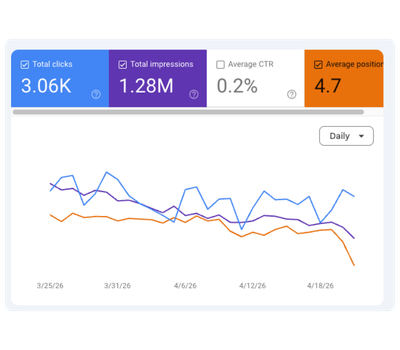
Measuring local SEO is trickier than standard SEO because tools like Ahrefs and SEMrush can't always capture what people are actually seeing in their local results. The data is too location-dependent. To get a real picture of how your local SEO is performing, you have to look at your actual data. Proper tracking setup helps, and Google Search Console is one of the best tools for understanding which local queries are bringing people to your site.
KEYWORD STRATEGY
Find the Right Words. Put Them in the Right Places.
Keyword research is the foundation of everything we do with SEO. It's how we figure out exactly what potential clients are typing into Google when they're looking for a therapist. Some are searching broad terms like "therapy near me." Others are getting specific, things like "EMDR therapy for trauma in [city]" or "therapist who takes Blue Cross." If your site doesn't include those terms, you're invisible to those people.
Once we identify the right keywords, we work them into the places that matter most. Page titles, meta descriptions, headers, and naturally throughout your content. The goal isn't to stuff keywords everywhere. It's to make sure your site speaks the same language your potential clients are already using so that when they search, Google knows your site is the answer.
Our toolkit
The Tools Behind the SEO Strategy
Google Search Console
This is where you see how Google actually views your site. Search Console shows you which pages are indexed, what keywords are driving traffic, and flags technical issues that could be holding your rankings back.
Google Analytics
Analytics tells you who's visiting your site, where they're coming from, and what they're doing once they get there. It's the clearest picture you'll get of what's working and where people are dropping off.
Google Keyword Planner
Keyword Planner helps you find the exact terms potential clients are searching for and how competitive those terms are. It's one of the best tools for making sure your content is targeting the right searches.
These are just a few of the tools we use to build and maintain a strong SEO strategy. There are plenty more in the toolbox, but these three are a solid foundation for understanding how your site is performing and where to focus next.
Mental health SEO timeline
SEO for Mental Health is a Long Game
SEO is not a quick fix. It’s a 6 to 12 month commitment that builds over time. Consistency in content, technical updates, and ongoing optimization is what separates practices that grow from practices that stay stuck on page two. We’re in it for the long haul with every practice we work with.
- Months 1–3
Foundations
Technical fixes, keyword plan, Google Business Profile and your most important pages.
- Months 3–6
Momentum
New location, specialty and blog content starts earning rankings and clicks.
- Months 6–12
Compounding
Steady organic inquiries that keep coming without paying for every click.
SEO for Therapists: Exceptional Advertising for Therapists and Mental Healthcare Providers
LMR Digital Marketing provides marketing including SEO for Therapists exclusively for mental and behavioral healthcare professionals, including psychiatrists. We bring patient leads to you efficiently and consistently through a blend of SEO and targeted advertising campaigns.
By focusing on your unique selling points and understanding the nuances of your practice, we ensure your digital strategy is as impactful as possible.
Running a treatment center, IOP or PHP program, or a multi-location organization? See how we approach behavioral health SEO for larger organizations.
Schedule a consult
The process
How Do We Do It?
Smart strategy backed by real data and years of experience working with therapists and mental health practices. We handle the SEO, explain everything in plain English through weekly reporting, and keep a steady stream of the right clients coming to your practice.
Request a strategy call- 1
Book Your Free Consultation
Meet with our team, walk us through your practice and goals, and we'll tell you exactly how we can help.
- 2
Build Your SEO Strategy
We work with you to build an SEO plan tailored to your practice, your specialties, and the areas you serve.
- 3
Watch Your Rankings Grow
We handle the work, keep you updated, and deliver clear reporting that shows you exactly what's moving.
FAQ
Common Questions About SEO for Therapists
Running a larger organization? Our behavioral health SEO page covers treatment centers and multi-location groups.
Ask a questionOur why
We Love Doing SEO For Therapists
At LMR, our passion for mental health shows up in every piece of work we produce. We create SEO strategies that do more than drive traffic. They connect real people with the therapists and mental health services that can actually help them. We work with practices that share our dedication to the well-being of others, and we take pride in knowing that when our SEO works, the right clients find the right providers. We are grateful to do work every day that makes a real difference in people's lives.










Start here
Find out what SEO could bring your therapy practice.
Tell us what you treat and where you see clients. Before we talk, we’ll look at your website, your Google Business Profile and the practices outranking you, so the call is about your caseload, not a generic pitch.
- Send the formTakes about two minutes. Rough answers are fine.
- Pick a time that suits youA free strategy call with someone who has worked inside a mental health practice.
- Walk away with a planA sample marketing plan for your practice is yours to keep, whatever you decide.
Your details stay with us. No lists, no resale, no surprise sales calls.
Request your strategy call
Get a Comprehensive Marketing Solution for Your Mental Healthcare Practice.
1. Submit Form 2. Schedule Consultation 3. Start custom marketing solution
A few quick questions and we’ll reach out to schedule.
Loading the form…
Client Showcase

"I cannot recommend LMR Digital enough-when I began working with them, my business was made up of two employees. Lauren not only took the time to help me understand what her services could do for my business, but clearly had the knowledge of my industry and the data to support her claims. LMR helped my business grow tremendously, and their expertise and business acumen undoubtedly helped my business weather the COVID-19 storm. Lauren will work with you to build a sustainable and profitable business, while learning the details necessary to create authentic work for you. If you want to expand and scale your business, working with LMR Digital is the way to do it. You will see their true passion for helping you succeed paired with a nuanced understanding of data, marketing techniques, website development, and all things necessary in 2020’s business world."
Elizabeth Burke, LCSWCEO, Empowered Therapy