
Marketing for mental health practices
Marketing for Mental Health
Marketing for mental health is how therapists, group practices and behavioral health organizations get found by people seeking care, and earn their trust before the first call.
It runs mainly through local search, a clear website, referral relationships and ethical advertising. Below you’ll find what each channel does, what to do first at your stage, and the ethics rules that apply to therapists. LMR Digital Marketing works only with mental and behavioral health practices, bringing SEO, Google Ads, web design, content, social media and email together into one plan so you can stay focused on client care.
New to marketing your practice? Read Therapist Marketing: A Complete Guide
- 100%Mental & behavioral health
- 1 teamSEO, ads, web & content
- YouApprove everything first

- Local SEO
- Google Ads
- Referrals
- Web Design
- Content Marketing
- Social Media
- Ethical Marketing
Mental health digital marketing
What Digital Marketing Looks Like for Mental Health Professionals
Digital marketing for mental health professionals focuses on helping the right people find your services without compromising trust, ethics, or professional standards. It includes how your practice appears in search results, how your website communicates your work, and how potential clients experience your practice before reaching out.
Because mental health care is highly regulated and deeply personal, marketing requires more care than generic strategies. Every word, design choice, and search result should reflect accuracy, professionalism, and respect for the client experience.
Mental Health Marketing requires more care, nuance and responsibility than other industries.
Growth matters but trust & credibility matter more.
Clear, ethical messaging is not only a matter of integrity but is imperative when it comes to driving growth. Traditional marketing techniques like discounts or promotions don't work with your future patients. They don't want a sale, they want to trust your credentials, your experience and your ability to help them.
Making Personal Decisions Online Can Be Tricky
Your future patients are researching the personal details of their lives. In some cases, they've never talked about these issues with anyone else until they type it into Google to find someone who can help. Your website needs to make it clear that your practice will address the specific area of concern (niche) that they are looking for help with so that the patient can make informed decisions about their own care.

Build Trust by Showing Up
Mental health marketing is different. It’s not about hype — it’s about heart. The right behavioral health marketing strategy creates space for trust, connection, and healing, even before a client reaches out.
With a thoughtful mental health marketing approach, you can:
- Build trust before someone ever picks up the phone
- Offer a calm, confident experience from the very first click
- Set your practice apart from other local providers
- Help reduce stigma and normalize seeking support
- Create a foundation for sustainable, values-driven growth
Outgrowing DIY marketing?
When to Get Outside Help With Your Marketing
Outside help makes sense when growing your practice starts requiring more time, expertise, or coordination than your team can realistically manage. You may have a strong referral network but inconsistent new-client inquiries, a website that isn't generating leads, marketing channels that aren't working together, or a growing practice that needs a more predictable way to fill caseloads.
LMR is a mental health marketing agency that works only with mental and behavioral healthcare organizations. Instead of asking your clinical or administrative team to manage SEO, advertising, content, social media, website updates, and reporting on top of everything else, we bring those pieces together under one strategy built around your actual growth goals. Still deciding? Our guide to hiring an agency vs. building marketing in-house walks through the trade-offs.
Does this sound like your practice?
Tick anything that feels familiar.
If two or more of these sound familiar, it may be time to bring in a team that does this every day.
Talk through your practiceMarketing may not be your passion — but it’s ours.
Whether you’re a solo clinician or part of a growing practice, you’re juggling a lot. That’s why we offer ethical, effective, done-for-you digital marketing built specifically for mental health professionals.
Our mission
We’re proud to partner with organizations that are improving mental health outcomes in their communities. For us, this work is personal. We care about making a difference, and we know that connecting people with the right services—yours—can be life-changing.
Whether you’re just getting started or scaling a multi-location practice, we’re here to help you grow with clarity, confidence, and measurable impact.
Mental & behavioral health marketing channels
Marketing Channels That Work for Mental Health Practices
Referrals still matter: plenty of clients arrive through a doctor, a school counselor or a friend. But even a referred client usually looks you up before they call, and everyone else starts on Google, a directory or social media. The channels below help therapists, psychologists and clinics get found by the right people, make a strong first impression, and stay in touch until someone is ready to book.
01
Get found
Show up when people search for care.
Competitor, Market, and Keyword Research
We dig into your competitors, market trends, and keyword data to identify opportunities that align with how your ideal mental health clients are searching online.
SEO for Mental Health Practices
SEO helps your practice show up when people are actively searching for therapy, counseling, or mental health support. But you can't just stuff keywords into a page and hope for the best. Good SEO for mental health practices includes strong site structure, well-written service pages, helpful educational content, and content that matches what people are actually searching for.
Read the best SEO strategy for a therapy practice or see our SEO for therapists service.
Local SEO and Google Business Profile Management
When someone searches for a therapist, psychologist, or mental health clinic in their area, local SEO is a big deal. Optimizing your Google Business Profile and strengthening your local SEO helps your practice show up in maps, local results, and high-intent searches from people who are already looking for support nearby. See what local SEO includes.
Google Ads for Mental Health Practices
Google Ads is the fastest way to reach people who are already searching for care, especially if you need inquiries sooner. The key is to build campaigns around the right keywords, clear messaging, and landing pages that make the next step feel simple and not overwhelming.
Want to expand your reach with paid ads? We manage ethical Google Ads and Meta campaigns tailored to behavioral health audiences. No pressure tactics — just clear, supportive messaging that drives results.
See Google Ads for therapists, our Facebook ads guide, or try the Google Ads calculator.
Referral Relationships & Community
Primary care doctors, pediatricians, OB/GYNs, school counselors, EAPs and other therapists send steady referrals when they know exactly who you help and how quickly you can see someone. A short introduction letter, a one-page referral sheet and the occasional talk for a school, employer or community group keep you top of mind.
Referral partners will look you up before they send anyone, so your website and Google Business Profile still need to back up what they’ve heard.
Therapist Directory Profile Optimization
Directory profiles aren't enough to fill an entire group practice but they still matter, especially for solo therapists and counselors. A strong directory profile should reinforce your niche, explain who you help, and make it easy for the right client to take the next step.
02
Turn visitors into clients
Make it easy to choose you and reach out.
HIPAA-Compliant Website Design
Your website is usually where people go when they are deciding whether to reach out, so it has to do more than just exist. A strong mental health website should feel secure, easy to navigate, and actually helpful. That means clear service pages, therapist bios that show off real personality, and messaging that makes it easy for someone to think, "this practice is the right fit for me."
See web design for mental health and how to make a therapy website accessible.
Website Optimization & Conversion
You have a few seconds to make an impression. We help make sure your site is easy to navigate, reflects your brand, and guides visitors to take action — whether that’s scheduling a call or filling out an inquiry form.
Sales Funnel & Process Optimization
Our strategists analyze your sales process to identify leaks, boost conversions, and make it easier for clients to move from inquiry to intake.
Automated Lead Generation & Nurturing
We help set up automation workflows that turn interest into action—capturing leads, sending follow-ups, and tracking conversions without manual effort. Read more about lead nurturing for mental health practices.
03
Stay top of mind
Build trust until they’re ready to book.
Content Marketing and Blogs
Content marketing is where you get to show people who you really are. Content helps mental health practices show up in search, answer common questions, and build trust before someone ever fills out a form. Blogs, FAQs, and specialty pages can all support SEO while making your practice feel more credible and less like it is trying way too hard to sell itself.
Read blogging for therapists.
Social Media for Mental Health Brands
Social media is usually not the main thing driving leads, but it can absolutely help with trust, visibility, and staying top of mind. For mental health practices, the best social media content usually feels educational, approachable, and real. Avoid being overly polished or salesy.
Whether you want to post consistently or just show up when it counts, we’ll create thoughtful content for Instagram, Facebook, LinkedIn, and more. See social media marketing for therapists.
Email Marketing and Lead Nurturing
Not everyone is ready to book the first time they find you. Email marketing helps you stay connected with potential clients, referral partners, and existing audiences over time. Whether that looks like newsletters, educational content, or follow-up sequences, email can help your practice stay relevant without being pushy.
Where to start
Which Marketing Your Practice Needs First
The right starting point depends on what is holding your practice back today, not on running every channel at once. Find the stage that sounds most like you.
01
New solo practice
Just opened, or building a caseload from zero.
- Start with
- A complete Google Business Profile, a simple website that names your specialties, fees and how to book, one or two directory profiles, and introductions to five to ten local referral sources.
- Add next
- Specialty pages for what you treat most, and one blog post a month answering questions clients already ask you.
- Skip for now
- Paid social ads and posting every day.
02
Established solo practice
Full or nearly full, but you want better-fit clients or to move toward private pay.
- Start with
- Rewriting your site around your niche and the outcomes you help with, specialty pages, and local SEO for the searches your ideal client actually uses.
- Add next
- A small Google Ads campaign on your highest-value specialty, and a newsletter that keeps referral partners in the loop.
- Skip for now
- Broad “therapist near me” ads that compete on price.
03
Group practice adding clinicians
Hiring and onboarding therapists who need full caseloads fast.
- Start with
- Google Ads with a landing page for each specialty, clinician bios that show real personality, fast follow-up on every inquiry, and tracking that shows which source each new client came from.
- Add next
- Location pages, content around each clinician’s specialty, and careers pages that help you hire.
- Skip for now
- A full rebrand before your intake process is fixed.
04
Multi-location practice or treatment center
Several sites, levels of care, or psychiatry, ABA or addiction treatment programs.
- Start with
- A location page and Google Business Profile for every site, tracking set up so health information never reaches ad platforms, and certification checks before you advertise, such as LegitScript for addiction treatment.
- Add next
- Separate campaigns by service line and location, CRM follow-up, and reporting that connects marketing to admissions.
- Skip for now
- One generic campaign covering every program.
Not sure which stage fits? On a strategy call we look at your visibility, locations, competition and capacity, then tell you which channels to start with and which to leave for later.
Find your starting pointGet found nearby
Local SEO for Mental Health Practices
For most practices, local search is where new clients start: someone types “therapist near me” or “anxiety therapy” plus their city, then picks from the map results and the first few websites. Local SEO is how your practice shows up there, and it is one of the most important parts of marketing for mental health.
Local SEO for a therapy practice includes:
- 1
Google Business Profile
Choose accurate categories (such as Psychologist, Counselor or Mental health clinic), list your services, add real photos, and keep hours and booking links current. It is often the first thing someone sees.
- 2
Location Pages
Give each location its own page so your site can show up for city-based searches and actually speak to the people looking for care in that area, with its own address, directions, clinicians and services.
- 3
A Website That Backs It Up
Google checks your website to confirm what your profile says. Clear service pages, real clinician bios and an obvious way to book help you rank and help people choose you.
- 4
Thoughtful Page Titles & Meta Descriptions
These important details help search engines understand your pages and make real people more likely to click when your site shows up in results.
- 5
Consistent Listings
Your practice name, address and phone number should match everywhere: your site, Google, Psychology Today, insurance directories and Yelp. Mismatches make it harder for Google to trust which details are right.
- 6
Reviews, Handled Ethically
Reviews help, but most professional codes say not to solicit testimonials from current clients. Make your review link easy to find, reply without confirming anyone is a client, and read the ethics rules before asking anyone.
Want to see where your practice stands? Request a mini SEO audit.
Content marketing for mental health
Social Media & Content Marketing for Therapy Practices
You don't have to be an Instagram Therapist to enjoy the benefits of social media and content marketing. This aspect of marketing helps mental health practices show their future clients who they really are. This is where your values and your personality can really shine. For ideas, see our guides to social media for therapists and blogging for therapists.
Videos & Reels
Short-form video helps people get a feel for your brand fast.
Email Newsletters
Newsletters help you stay top of mind without being annoying about it.
Images & Carousel Posts
Carousel posts and static graphics are great for breaking down ideas in an easy and shareable way.
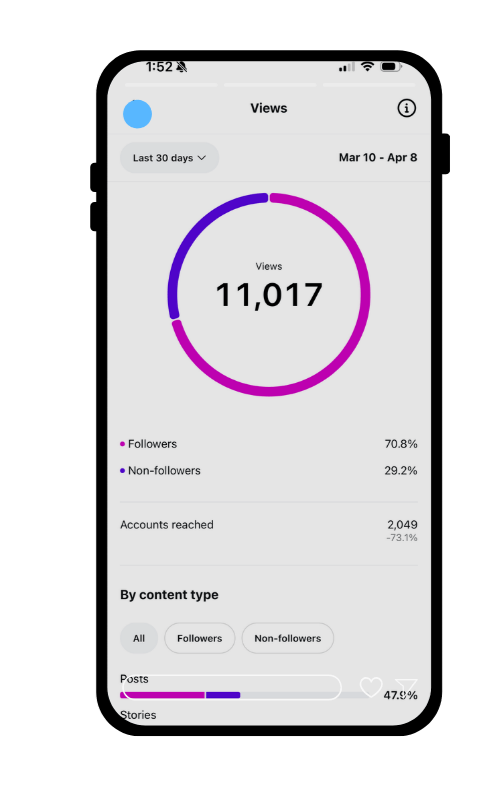 11,017 views in 30 days
Blogs
Blogs help your practice show up in search, answer real questions, and build credibility.
Specialty Pages
Specialty pages help people quickly see what you treat, who you help, and whether your practice feels like the right fit for what they are looking for.
Ethics & compliance
The Ethics Rules That Shape Marketing for Mental Health
Therapists answer to licensing boards, professional codes and HIPAA, and the ad platforms add their own health rules on top. Good marketing for mental health works inside those lines from the start, so nothing has to be pulled down later.
Testimonials and reviews
The APA (Standard 5.05), ACA (C.3.b) and NASW (4.07) codes all say not to solicit testimonials from current clients or anyone vulnerable to undue influence. That generally includes asking current clients for Google reviews.
You can make your review link easy to find and reply to reviews, but never confirm that someone is or was a client.
Claims and credentials
Skip guarantees like “feel better in six sessions,” unverifiable superlatives and before-and-after stories. List only the licenses, credentials and states you actually hold.
Describe what therapy with you involves and who it helps, rather than promising outcomes.
Ad targeting and ad copy
Google and Meta restrict targeting people by health condition, and Meta removed most health-related detailed targeting in 2022. Meta’s personal attributes policy also rejects copy like “Are you struggling with anxiety?”
Build campaigns around what people search for and where they live, and write ads that never imply you know something about the viewer.
Addiction treatment ads
Advertising addiction treatment on Google or Meta in the US requires LegitScript certification first, and ads run before approval are usually disapproved.
Read our LegitScript certification guide to see whether it applies to you.
Tracking and HIPAA
Ad pixels and analytics tags can pass health information to Google or Meta, especially on booking, intake and patient portal pages. Federal guidance on tracking technologies was partly set aside in court in 2024, but the risk has not gone away.
Keep pixels off those pages, keep clinical details out of contact forms, and use HIPAA-compliant tools with a signed BAA for anything that collects health information.
Safety on your site and social
Add a crisis notice with the 988 Suicide & Crisis Lifeline (call or text 988) to your contact page and forms, and label blog posts as general information rather than treatment advice.
Keep personal and professional social accounts separate so followers don’t mistake a comment thread for therapy.
This is general guidance, not legal advice. Your licensing board and state rules can be stricter, so check them before you launch a campaign.
Measuring results
How to Tell If Your Marketing Is Working
Website traffic and followers are easy to count, but they don’t fill caseloads. These are the numbers worth reviewing every month.
New inquiries by source
Calls, forms and booking requests, split by Google search, Google Ads, directories, referrals and social. Ask “How did you hear about us?” at intake as a backup.
Cost per inquiry
What each paid channel spends, divided by the inquiries it brings in. Compare it with what a new client is worth to your practice.
Inquiry-to-intake rate
How many inquiries become a first session. A low rate usually points to slow follow-up or too many booking steps, not to the marketing itself.
Response time
How quickly someone hears back. People looking for a therapist often contact several at once, and the first helpful reply tends to win.
Caseload fill by clinician
Whether new clients are reaching the clinicians who actually have openings, so ads and content point to the right people.
A note on Google Analytics
Google doesn’t sign a BAA for Google Analytics, so it shouldn’t receive health information. Track page views and form completions, never what someone typed into a form.
Planning paid ads? Estimate clicks and inquiries with our Google Ads calculator, then read how to set a marketing budget for a therapy practice.

Nothing goes live without you
Made By Us, Approved By You
Let LMR Digital Marketing help you with your content!
No content or changes are ever made without your approval. All blogs, emails, social media, web page edits, and everything in between are required to be reviewed and approved by you before going live. You can rest easy with the trustworthy team at LMR Digital Marketing.
Get started- 10k+Social Media Posts Each Year
- 900+Blogs Written Each Year
- 500+Websites Built
- $2M+In Ad Spend Managed Each Year
Client results
What Practices Say About Working With LMR
“The cost per lead has consistently beaten our targets.”
Read the full review
“Working with LMR has brought outstanding results for both BHSVA and Virginia ABA. Their approach to digital marketing, covering everything from Google and Meta ads to website development and SEO, has drastically improved our digital footprint. The cost per lead has consistently beaten our targets, reflecting the efficiency and effectiveness of their campaigns. The quality of their content creation for social media and blogs has not only engaged our existing community but also attracted new interest. LMR’s ability to seamlessly integrate various aspects of digital marketing has been pivotal in enhancing our online presence.”
“LMR helped my business grow tremendously.”
Read the full review
“I cannot recommend LMR Digital enough-when I began working with them, my business was made up of two employees. Lauren not only took the time to help me understand what her services could do for my business, but clearly had the knowledge of my industry and the data to support her claims. LMR helped my business grow tremendously. They will work with you to build a sustainable and profitable business, while learning the details necessary to create authentic work for you. If you want to expand and scale your business, working with LMR Digital is the way to do it. You will see their true passion for helping you succeed paired with a nuanced understanding of data, marketing techniques, website development, and all things necessary in a modern digital business world.”
See the strategy and numbers behind our work in our case studies.
Brands We Work With

How we work
A Marketing Approach That Grows With Your Company
Phase 1
Development
Our onboarding process starts with discussing your business goals and how you envision your growth. We also get connected to everything we need including your social media accounts, payment methods, and website. If your business doesn't have social media or a website, we will create them for you.
Phase 2
Scaling
As things start to heat up, you'll start receiving leads from our advertising efforts and we'll discuss your lead quality as well as your team's ability to handle the amount of leads you're gaining.
Phase 3
Nurturing & Follow Up
Nurturing your leads is essential for building trust with your business. Through follow up operations like weekly email newsletters, your new clients can easily see that you exude professionalism and are reachable.

Walk side by side with your expert marketing team
Getting started is easy. Upon onboarding, we meet with each of our clients on a weekly basis to discuss goals, completed work, and updates. As the foundations for your marketing operations are successfully laid, you can optionally choose to begin meeting on a bi-weekly basis. Our team works collaboratively with you and your team to meet business objectives and grow your clinic.
- Weekly meetings to start
- Bi-weekly once foundations are laid
Want To Know What These Phases Would Look Like For Your Business?
Schedule consultMental health marketing FAQ
Marketing for Mental Health: Frequently Asked Questions
What therapists, group practices and behavioral health leaders ask us most. If yours isn’t here, ask it on a strategy call.
Ask a questionMarketing for mental health is how therapists, counselors, psychiatrists, group practices and behavioral health organizations help people who are looking for care find them and decide to reach out. It usually combines local SEO, a clear website, referral relationships, content and ethical advertising, all within professional codes and HIPAA.
Yes, when done responsibly. Ethical digital marketing focuses on clarity, accuracy, and informed decision-making rather than pressure or exaggerated claims.
Google Ads and directory profiles can bring inquiries within weeks. SEO and content usually take three to six months to build, longer in competitive cities, and referral relationships grow over months of steady contact. Long-term growth comes from consistency.
Marketing for mental health professionals is not the same as promoting a restaurant or retail brand. The stakes are higher because your work directly affects people’s well-being, and you answer to licensing boards, professional codes and HIPAA.
Good marketing for mental health is ethical, compassionate and careful with health information. Instead of discounts and urgency, it focuses on clarity, reassurance and making the next step easy, which makes people more likely to trust you and book an appointment.
This depends on who you work with - do you work with couples, parents, children, people with a specific condition? The best marketing services for therapists usually include SEO, Google Ads, website updates, landing pages, and content strategy. The right mix depends on your goals, your specialty, and how quickly you want to grow.
For a full walkthrough, read Therapist Marketing: A Complete Guide.
Yes. SEO helps mental health practices show up when people are actively searching for support, which makes it one of the most valuable long-term marketing channels. It takes time, but the payoff is steady, high-intent traffic. See the best SEO strategy for a therapy practice.
It depends on how many new clients you need each month, what a new client is worth to your practice, and how competitive your area is. Work backward from those numbers rather than picking a percentage. Our guide on how to set a marketing budget for a therapy practice walks through the math.
Most professional codes, including APA Standard 5.05, ACA C.3.b and NASW 4.07, say not to solicit testimonials from current clients or anyone vulnerable to undue influence, and that generally covers asking for Google reviews. Many practices simply make their review link easy to find and let reviews come on their own. When you reply to any review, don’t confirm that the person is a client, and check your licensing board’s rules too.
For solo therapists it usually is: it’s a paid monthly listing that people actively browse to choose a therapist, and a strong profile can bring steady inquiries. It works best when your profile names your niche, sounds like you, and links to a website that backs it up. For a group practice it’s a supporting channel rather than the main source of new clients.
Yes, with limits. Meta restricts targeting by health condition and rejects ads that imply something about the viewer, like “Are you struggling with anxiety?” Meta ads tend to work best for awareness, groups, workshops and hiring, while Google Ads usually brings more ready-to-book inquiries. Addiction treatment ads also require LegitScript certification. Read our Facebook ads guide.
Start with a complete Google Business Profile, a clear website, one or two directory profiles, and introductions to local referral sources like doctors, pediatricians and school counselors. Speaking to community groups and writing helpful blog posts add up over time. See building an online presence for a new practice.
We plan every website, form and campaign with HIPAA in mind. We build HIPAA-compliant websites that are secure, professional, and welcoming, keep contact forms free of clinical details, set up ad tracking so client health information isn’t shared with ad platforms, and send sensitive intake through the secure tools built for it, like your EHR’s client portal.
Yes. We work with solo practitioners, group practices, multi-location clinics and treatment centers, and we shape the plan around your stage rather than a fixed package. See where to start by practice stage.
Start here
Let's Talk Strategy
Tell us about your practice, who you want to reach and what’s holding growth back. Before we talk, we’ll look at your visibility, locations, competition and capacity, so you leave the call knowing which channels to start with.
- Send the formTakes about two minutes. Rough answers are fine.
- Pick a time that suits youA free strategy call with someone who has worked inside a mental health practice.
- Walk away with a planA sample marketing plan for your practice is yours to keep, whatever you decide.
Your details stay with us. No lists, no resale, no surprise sales calls.
Request your strategy call
Get a Comprehensive Marketing Solution for Your Mental Healthcare Practice.
1. Submit Form 2. Schedule Consultation 3. Start custom marketing solution
A few quick questions and we’ll reach out to schedule.
Loading the form…